

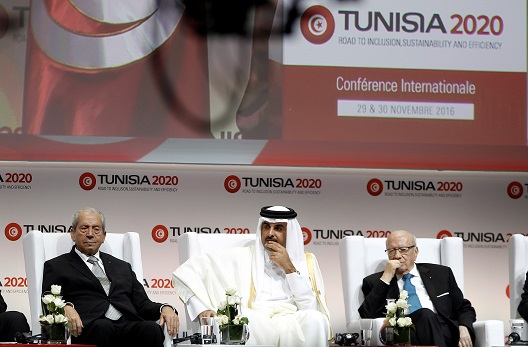
Qatar has emerged as a pivotal trade partner for Tunisia, especially since the political upheaval following the Arab Spring in 2011. With over 1.5 billion USD in investments, loans, and other forms of assistance poured into Tunisia, Qatar’s commitment to aiding the country’s transition to democracy has been commendable. This relationship has seen thousands of Tunisians work in Qatar, and with the ongoing Gulf crisis, it has opened doors for Tunisian entrepreneurs to tap into the Qatari market, exporting industrial products and even setting up factories.
In stark contrast, Saudi Arabia (KSA) and the United Arab Emirates (UAE) have historically taken a more hostile stance towards Tunisia since the ousting of dictator Zine El-Abidine Ben Ali. Initially, KSA provided refuge to Ben Ali, actively attempting to suppress the Tunisian revolution by pressuring Tunisia to bolster elements of the former regime while curtailing the rise of Political Islam.
As tensions in the Gulf escalated in June 2017, Tunisia maintained a position of neutrality. Yet, the actions taken by the Tunisian government could be interpreted as nudging towards the Saudi and Emirati axis. Is Tunisia merely recalibrating its foreign policy, or is it veering towards a more substantial alignment away from Qatar?
Doha’s Shrinking Role
Qatar’s influence in the region has undeniably waned since 2013, exacerbated by the blockade from what is known as the ‘Boycott Quartet’—Bahrain, KSA, Egypt, and the UAE. Consequently, some Tunisian analysts are growing increasingly apprehensive about the long-term viability of the Tunis-Qatar relationship. Simultaneously, both Saudi Arabia and the UAE have dangled the prospect of investments in Tunisia, albeit conditional upon a pivot away from its longstanding ties with Qatar.
Adding to the complexity, KSA and the UAE have garnered backing from the Trump administration, which, alongside European allies like France, aims to gain influence in North Africa and secure stability in Libya—a region that is of immense concern to Tunisia. The intertwined fates of Tunisian policies and external pressures from these powerful nations highlight how both domestic and international dynamics can shape Tunisia’s future.
Public sentiment in Tunisia remains split over the Gulf crisis. Support for Qatar is robust among Ennahda party supporters and various revolutionary factions, but there is a significant faction opposed to Qatar, comprising past regime advocates and certain leftist and pan-Arabist groups. This opposition stems from fears that Qatar’s backing could foster political Islam, which has historically met with resistance in Tunisia.
Saudi Appeased, the Emirates Unhappy
The context of international relations reveals that the dynamics between Tunisia and the Saudi-Emirati axis are anything but straightforward. Despite the latter’s aversion to Islamist groups, Ennahda has managed to establish lines of communication with the Saudi leadership, primarily by emphasizing shared religious sentiments during pilgrimages.
Under King Salman’s reign since January 2015, new avenues opened between Saudi Arabia and Tunisia, leading to promises of significant investments during the “Tunisia 2020” investment conference. However, as Nidaa Tounes—a party historically favorable to the UAE—began to lose ground, the political landscape shifted, inherently strengthening Ennahda’s position and, subsequently, the perception of unchecked Qatari influence.
Scramble for Tunisia
Recent developments indicate a more aggressive stance from the Saudi-Emirati alliance to diminish Qatar’s standing in Tunisia. Leaked documents from a UAE think tank outlined strategies to identify Tunisian politicians supportive of Emirati interests while advocating for a public relations campaign to undermine Islamist groups aligned with Qatar.
During the summer of 2017, multiple visits from Saudi and Emirati officials underscored this strategy, with significant investment pledges being made to cement ties with Tunisia. Such initiatives are increasingly inclined towards redirecting Tunisia’s political orientation more closely aligned with Saudi and Emirati preferences.
End of Tunisia’s Neutrality?
In May 2017, the Tunisian government announced a proactive stance against corruption, which inadvertently brought figures with connections to Qatar into the crosshairs. The detainment of Chafik Jarraya, a noted Qatari ally, signals a potential shift in Tunisia’s domestic policies, possibly linked to increased scrutiny of ties with Qatar amid external pressures.
The self-proclaimed Libyan National Army’s accusations against Qatar regarding funding terrorists through Tunisia only add to the mounting pressure for the Tunisian government to redefine its allegiances. Such actions indicate a gradual departure from its previous neutrality, as the government focuses more on establishing security and counter-terrorism measures, which align with Saudi interests in the region.
And Threats to Democracy
The political agreement fostering collaboration between President Caid Essebsi and Ennahda’s Ghannouchi highlights the delicate balance of power in Tunisia, dictated by both local and international factors. However, as global dynamics shift, this agreement appears increasingly tenuous. Tunisia’s dilemma lies in maintaining its critical economic relationship with Qatar while resisting external pressures from KSA and the UAE.
Ultimately, while Tunisia navigates its path amid these conflicting influences, it must tread carefully. Aligning too closely with the Saudis and Emiratis poses risks to its social fabric and democratic aspirations, with potential repercussions that could echo the political volatility seen in 2012 and 2013. As it stands, the future dynamics of Tunisia’s foreign policy will undoubtedly shape the country’s socio-political landscape for years to come.
Youssef Cherif is a Tunis-based political analyst. Follow him on Twitter @faiyla.
Image: Tunisia’s President Beji Caid Essebsi (R), Qatar’s Emir Sheikh Tamim bin Hamad Al-Thani (C) and President of the Assembly of People’s Representatives Mohamed Ennaceur attend the opening of the international investment conference Tunisia 2020, in Tunis, Tunisia November 29, 2016. REUTERS/Zoubeir Souissi
