
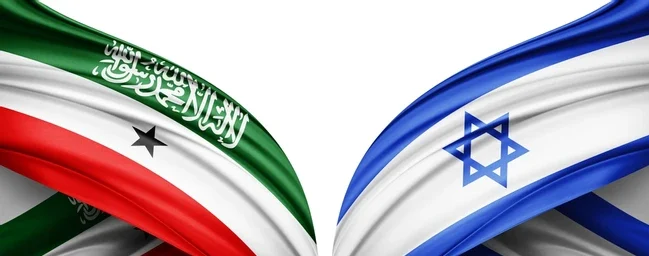
From early recognition in 1960 to shared interests in the Red Sea, a quiet friendship may soon find new meaning.
When the State of Somaliland briefly stood as an independent republic on June 26, 1960, Israel was among the first nations to acknowledge its sovereignty. It was a modest but significant gesture — a recognition from one emerging democracy to another, each forged from struggle and sustained by resilience.
Echoes Along the Red Sea
Long before diplomacy, trade and faith connected the two societies. During the early 20th century, Berbera’s harbor bustled with merchants from Aden, Djibouti, and Jerusalem. A small Jewish community maintained a synagogue near the port, part of a cosmopolitan network that linked Somaliland to the broader Red Sea world.
Though that community eventually dispersed, its legacy endures in the collective memory of Berbera — a reminder that the Horn of Africa once stood at the crossroads of openness and exchange.
Israel’s Voice in Somaliland’s Hour of Need
Three decades after independence, during Somaliland’s most painful chapter, Israel again showed moral clarity. In May 1990, as the Somali regime’s campaign ravaged Hargeisa and Burao, Israel’s chargé d’affaires to the United Nations, Johanan Bein, submitted a formal letter to the Secretary-General (U.N. document A/45/264 – S/21283).
The letter drew attention to the U.S. Department of State’s Country Reports on Human Rights Practices for 1989, which detailed widespread abuses in northern Somalia. Israel urged the U.N. to circulate those findings officially — ensuring that the atrocities committed against the Isaaq population were recorded in the annals of the international community.
It was a rare and principled act at a time when few governments were willing to acknowledge the crisis.
A Model of Stability and Democratic Governance
Since restoring its sovereignty in 1991, Somaliland has become one of Africa’s quiet success stories. It has maintained peace, held multiple competitive elections, and earned international praise for good governance and civil society participation.
Global democracy indices have repeatedly ranked Somaliland among the most open and stable territories in the Horn of Africa — a distinction that has attracted observers from across the region.
Its safety, rule of law, and culture of civic engagement make it a trusted environment for trade, investment, and diplomatic cooperation — precisely the kind of partner the Abraham Accords framework seeks to encourage.
Converging Interests Across the Red Sea
Geographically, Somaliland and Israel sit opposite each other on one of the world’s most critical trade corridors. Israel’s port of Eilat anchors the northern Red Sea; Somaliland’s Berbera port stands at the western gateway to the Gulf of Aden.
Both nations share a vested interest in maritime security, regional stability, and sustainable development. Potential cooperation could include water desalination, agriculture technology, digital infrastructure, and renewable energy — fields in which Israel’s innovation and Somaliland’s geography perfectly complement each other.
Extending the Spirit of the Abraham Accords
The Abraham Accords, which reshaped Israel’s relations with much of the Arab world, represent a new chapter of pragmatic engagement. Somaliland, though unrecognized internationally, embodies the same principles of dialogue and coexistence that the Accords promote — valuing partnerships that advance prosperity over division.
By engaging openly with Israel, Somaliland could help extend the Accords’ reach into the Horn of Africa, creating a bridge between Africa and the Middle East through trade, technology, and shared security along the Red Sea.
A Friendship Ready for Renewal
For Somaliland, Israel’s early recognition in 1960 and moral support in 1990 remain moments of historic solidarity. For Israel, Somaliland stands as a stable, democratic partner in a strategically vital corridor.
Both nations have built their futures through determination and belief in self-governance. Now, as new regional alliances take shape under the Abraham Accords, the quiet friendship between Somaliland and Israel may yet evolve into a partnership that strengthens peace, prosperity, and understanding across the Red Sea.
