

Carl Murphy’s Legacy at The Afro-American
CARL MURPHY WAS TEACHING and serving as chair of the German language department at Howard University in 1918 when his father sent word that he was needed in Baltimore. The time had come to return home and work for the family paper.
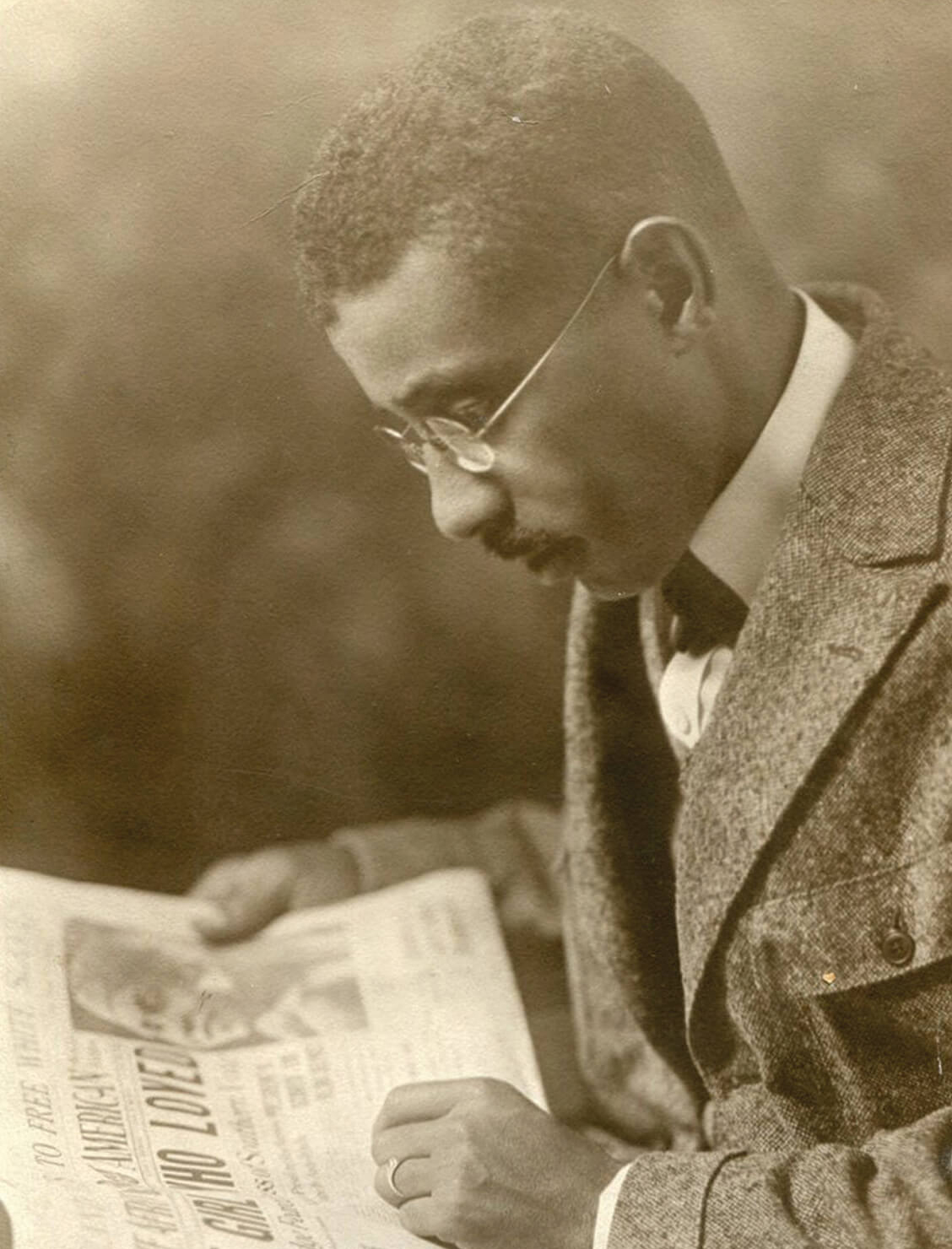
A portrait of visionary publisher Carl Murphy. —Courtesy of The Afro American Newspaper Archives
Four years later, the dynamics of the Murphy family shifted profoundly with the passing of John Murphy Sr. The surviving members of the Murphy clan elected Carl to fill his shoes as the publisher and chief editor of The Afro-American. Armed with degrees from Frederick Douglass High School, Howard University, and Harvard, the younger Murphy immersed himself fully in his new role, eager to learn the nuances of the newspaper and publishing business.
A Rising Beacon of Black Journalism
Under Carl Murphy’s leadership, The Afro-American blossomed into the largest circulating Black newspaper on the East Coast. It became one of the most influential and financially successful Black newspapers in the nation during a critical time in American history. Carl understood the importance of quality content, hiring the best writers, photographers, and artists. This roster included the renowned Romare Bearden, who served as The Afro’s weekly cartoonist in the mid-1930s. His later work, “Baltimore Uproar,” would immortalize the legacy of Billie Holiday and American Jazz in a vibrant mosaic at the Upton Metro Station.
Celebrated Voices of Influence
During Carl’s tenure, several acclaimed journalists emerged, each leaving an indelible mark on the fabric of American journalism. Notably, The Afro featured the influential Mitchell, known later as the “101st Senator” for his advocacy of Civil Rights legislation in the 1960s. Then there was Moses Newson, a courageous reporter who braved the civil rights landscape to bring impactful stories to the forefront. Figures like William Worthy, who defied travel restrictions to cover revolutions abroad, and J. Saunders Redding, the first Black faculty member of an Ivy League institution, also contributed to a journalistic renaissance under Murphy’s leadership.
One particularly compelling story is that of Simeone Booker, who grew up around The Afro—his relative Carl Murphy served as his inspiration. After winning a competitive Neiman scholarship to Harvard, he faced challenges breaking into mainstream journalism, landing at The Washington Post as a cub reporter. Reflecting on his journey, Booker remarked, “I thought I could do something like it,” signifying a deep-seated ambition shaped by his family’s legacy.
The Trailblazers of Sports Journalism
Also making history during Carl Murphy’s time was Sam Lacy, a Howard University graduate and former semi-professional athlete. Lacy penned the must-read sports column “A to Z” for nearly six decades and became a central figure in the fight to integrate baseball. He chronicled the accomplishments of Negro League legends like Satchel Paige and Josh Gibson while also covering Hall of Famers such as Jackie Robinson. Lacy’s reflections on the tense days of Robinson’s first spring training are poignant: “I felt a lump in my throat each time a ball was hit in his direction those first few days.”
Lacy’s contributions didn’t end there; he became the first Black sportswriter to join the Baseball Writers’ Association of America, earning his place in the Baseball Hall of Fame. His narrative was a continuation of The Afro’s mission to elevate Black voices in all aspects of life.
Pioneering Women in Journalism
Presciently, and under Murphy’s direction, The Afro-American became a haven for trailblazing women journalists. In the 1930s, it was the first Black newspaper to hire female sportswriters—Nell Dodson and Lillian Johnson blazed trails of their own. Dodson highlighted disparities in the treatment of Black and white athletes, ultimately being promoted to sports editor with a column called “Lady in the Press Box.” She would later cover cultural pieces for major New York outlets.
Johnson also carved out a significant career, famously sitting down with Billie Holiday for a dressing room interview in 1937. Her conversations provided a captivating glimpse into the life of the “New Swing Sensation” and illustrate the vibrant arts scene of the era.
The Importance of The Afro-American’s Archive
The significance of The Afro American in documenting the Black experience cannot be overstated. Corey Lewis, an archivist at the Maryland State Archives, emphasizes that, without The Afro, essential narratives of Black neighborhoods, businesses, and communities would remain untold. “Where would people who looked like the people in the communities that The Afro covered see themselves?” he asks poignantly, highlighting the historical importance of the publication in capturing the humanity often overlooked in mainstream records.
Walking through the archives, he notes, “You might hear about traumas during Jim Crow, but where do you find stories about neighborhoods built by resilience?” These accounts, abundant in the pages of The Afro, showcase the rich tapestry of life and community that thrived amid adversity.
