

Evolving MENA Power Balances: The Future of U.S. Engagement in the Region
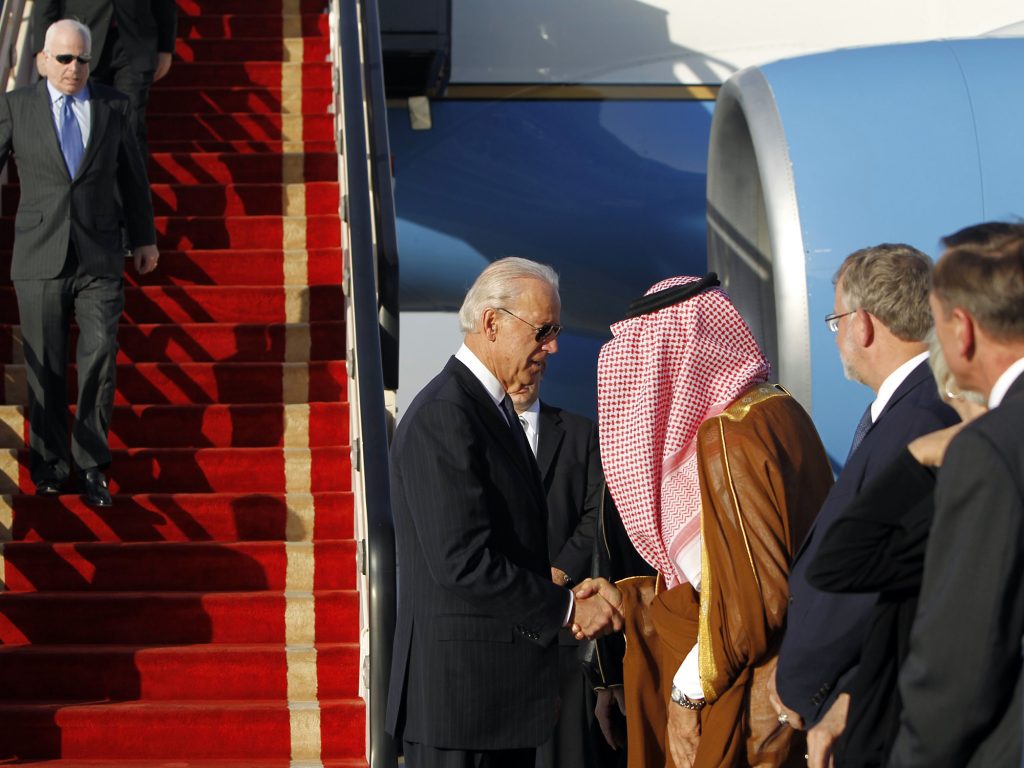
The dynamics of the Middle East and North Africa (MENA) region are increasingly complex, particularly as the United States redirects its attention toward Eastern Europe amid the Ukraine conflict. President Joe Biden’s first visit to the MENA region since assuming office presents a pivotal moment to navigate the future role of the U.S. The central question is whether we are witnessing the dawn of a post-U.S. era in this region, and how the emerging geopolitical landscape will be shaped.
Historical Context and Recent Shifts
Over the last decade, the MENA region has experienced significant geopolitical changes, primarily influenced by the Arab Spring uprisings in the early 2010s. These events were catalyzed by longstanding grievances rooted in socio-economic disparities and political repression. Additionally, the U.S. invasion of Iraq in 2003 inadvertently facilitated Iran’s growing influence, exacerbating the competitive dynamics among regional powers. Former President Obama’s “pivot to Asia” further reduced U.S. military engagement in the MENA region, leading to ongoing instability in countries like Syria, Libya, and Yemen.
The lack of decisive U.S. intervention in these conflicts has paved the way for increased rivalry among MENA states, creating openings for the expansion of Russian and Chinese influence. The U.S. has gradually been perceived as less committed to regional stability, triggering concerns among Arab nations, particularly in the Gulf, which depend heavily on American security guarantees.
Diplomatic Realignments and Regional Fatigue
In the wake of years of conflict and competition, MENA leaders are now gravitating toward diplomacy as a means of achieving stability. The COVID-19 pandemic and resulting fatigue from prolonged conflicts have made costly confrontations less tenable. While many states are exploring new diplomatic outreach—some even normalizing relations with adversaries—these efforts remain fragile. Long-standing rivalries are far from resolved, and the landscape of alliances is continually shifting.
The socioeconomic impacts of the Ukraine war have added another layer of complexity. Countries in the MENA region, already struggling with structural vulnerabilities, find themselves navigating the consequences of rising global energy prices and potential disruptions to food supplies. This uncertainty is compounded by the U.S.’s renewed focus on Eastern Europe and Russia’s strategic maneuvers in the Middle East.
The Role of External Powers: Russia and China
Analysts like Maha Yahya and Jonathan Panikoff highlight a growing sentiment among MENA governments that U.S. support—especially in terms of security—is waning. Arab states that rely on the U.S. find themselves vulnerable to escalating threats from Iran. In contrast, Russia is strengthening relations with several countries, capitalizing on their frustrations. By offering a non-interventionist stance on contentious internal issues, such as human rights violations, Russia has been able to solidify ties.
Meanwhile, China has emerged as a critical player in the MENA region, particularly in sectors like trade and energy. Despite being one of the largest trading partners in the Middle East, China’s hesitation to deepen its engagement amid ongoing conflicts reflects its cautious approach to safeguarding its own interests. The complexity of the region’s power dynamics is further enhanced by China’s ambitions, as it attempts to increase influence without becoming entangled in local disputes.
The Emerging European Dimension
As the U.S. recalibrates its foreign policy and the roles of Russia and China gain prominence, European nations must also adapt to this evolving landscape. Experts like Julien Barnes-Dacey argue for a more proactive European role in the MENA region, emphasizing that stability requires a multi-faceted approach. Europe has the potential to mediate in increasingly intricate situations and could serve as a stabilizing force, promoting a less U.S.-centric order.
The question of whether the MENA region will stabilize fundamentally hinges on the extent to which regional actors and external powers—most notably the U.S.—are willing to engage. With multiple competing interests, the framework of alliances is being redefined, suggesting that the region may no longer fit into a traditional bipolar world dominated by the U.S. and its allies.
Expert Perspectives
In engaging with the nuances of these geopolitical shifts, experts like Karim Mezran, Jonathan Panikoff, and Mark N. Katz offer invaluable insights into the potential trajectories of MENA. Their assessments highlight that while Washington might still see the region as important, it is no longer the primary focus of U.S. foreign policy, paving the way for a more intricate interplay of interests among global powers.
The MENA region stands at a critical juncture. The interplay of diplomatic efforts, regional fatigue, and external influences holds the key to its future stability and order. Understanding these dynamics will be crucial for policymakers and stakeholders navigating this pivotal phase in international relations.
