

Guinea: A Strategic Opportunity for the U.S. Amid Global Competition
This article is part of a series published by the Atlantic Council’s Africa Center and the GeoStrategy Initiative of the Scowcroft Center for Strategy and Security, exploring the nexus between U.S. security and economic interests across Africa. The previous edition can be read here.
A Pivotal Moment in Guinean Politics
When Mamady Doumbouya ascended to the presidency of Guinea in January 2026, the event wasn’t merely a national affair. It attracted a prestigious guest list, including the presidents of Rwanda, Gabon, Guinea-Bissau, and Mauritania, along with Nigeria’s vice president. Notably, the presence of a senior U.S. delegation alongside a special envoy from Chinese President Xi Jinping underscored Guinea’s rising significance on the global stage.
Guinea finds itself at the critical intersection of regional insecurity, competition over vital minerals, and the evolution of democratic governance in West Africa. This positioning makes the country a focal point for both Washington and Beijing, each vying for influence.
Regional Insecurities and Western Alliances
Guinea faces a precarious security environment threatened by instability in the Sahel region, where a staggering 51% of global terrorism-related fatalities occurred in 2024. The surrounding areas are rife with illicit trafficking networks, and military juntas currently govern several countries in the region. Despite these challenges, Guinea has managed to maintain a Western-leaning stance post the 2021 coup, standing out as an ally among the tumult of Sahelian politics.
In 2023, the U.S. government formally backed Guinea’s democratic transition through initiatives such as the African Democratic and Political Transitions program. General Doumbouya’s administration showcased a commitment to electoral accountability, culminating in a successful election in December 2025, where he won 78% of the vote, a feat reflecting a rare moment of unity in Guinea’s historically fragmented political landscape.
Mineral Wealth: A Double-Edged Sword
Guinea’s rich natural resources, particularly its abundance of bauxite—holding about 25% of the world’s reserves—play a significant role in global economic dynamics. The nation is a critical supplier of aluminum, utilized across diverse sectors including automotive and aerospace. Moreover, it boasts substantial deposits of gold, gallium, lithium, uranium, and graphite, drawing interest from conglomerates worldwide.
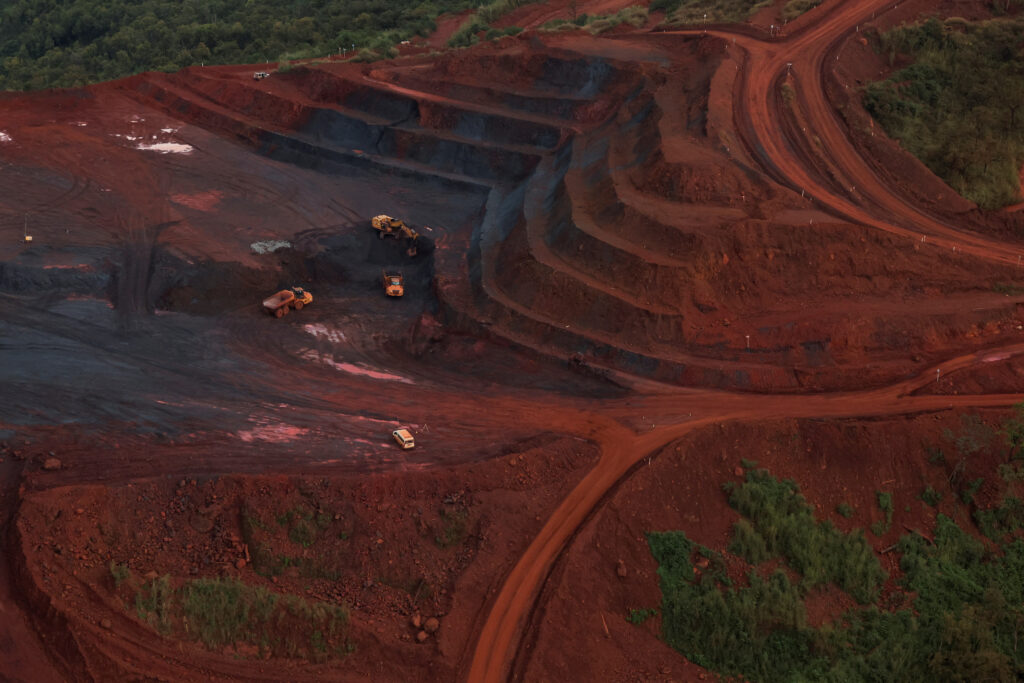
Perhaps the most notable project is the Simandou mine, where the iron ore deposits account for over 10% of the global supply. Although the mine’s ownership is divided chiefly between Chinese and Australian interests, Doumbouya’s administration has initiated a shift, reclaiming over 250 mining licenses from Chinese companies due to issues like environmental damage and contract noncompliance. This opens the door for U.S. companies to compete more evenly in this lucrative sector.
Infrastructure Reforms: A Shift in Alliances
Doumbouya’s administration also moved to end China’s monopoly on rail and port infrastructure associated with Simandou, paving the way for a joint venture that increases U.S. presence in Guinea’s mining ecosystem. This shift not only offers Guinea control over its resources but also enables infrastructure improvements that are crucial in a region generally void of robust transport networks.
A Unified Approach to Security and Economic Interests
The Biden administration’s 2025 National Security Strategy emphasizes critical minerals derived from Africa, positioning Guinea as pivotal in U.S.-Africa relations. Doumbouya’s invitation to Washington as one of just three African leaders further signals the importance of Guinea in U.S. foreign policy.
China’s long-standing influence in Guinea’s mineral sectors presents challenges; however, Washington aims to provide tangible alternatives to ensure its investments do not lag. Creating a comprehensive framework that encompasses counterterrorism efforts, supporting maritime security, and bolstering governance within the extractives sector will be essential.
Strengthening Collaborative Security Efforts
Prior to 2021, the U.S. committed substantial resources to training Guinean peacekeeping forces. Unfortunately, political changes compelled a reassessment of this cooperation. Nonetheless, both U.S. and Guinean authorities are eager to reinstate such initiatives, especially as instability looms in neighboring nations.
Coordinated joint operations with French and European Union partners can enhance Guinea’s maritime capabilities and overall security architecture. Steps to improve regional intelligence sharing, enhance border security, and monitor illicit trafficking will provide Guinea with the resilience it needs to navigate a tumultuous neighborhood.
Infrastructure Development: The Liberty Corridor Project
A promising avenue lies in the development of the Liberty Corridor, linking Guinea to neighboring Liberia. This project stands to diversify critical mineral supply chains and enable resource exports, underscoring Guinea’s strategic role in the broader West African economic landscape.
To ensure that Guinea’s natural wealth translates into tangible benefits for its citizens, U.S. and European partners should collaborate on transparency initiatives. This could involve technical assistance for revenue management and contract design, aimed at improving accountability in the extractive sector.
Diversification Challenges and Opportunities
While mining remains a backbone of Guinea’s economy, the need for diversification cannot be overstated. Opportunities in sectors like hydropower, agriculture, and digital infrastructure can serve to mitigate over-reliance on extractive industries. Investments that foster human capital and technological development will be crucial for Guinea’s long-term prosperity.
A New Era of U.S.-Guinea Relations
Guinea may not often dominate headlines in U.S. media, but it is undoubtedly a strategic asset. The nation’s rich mineral resources, commitment to democratic reforms, and welcoming attitude toward diversified partnerships present a unique opportunity for the U.S. to foster mutually beneficial relations.
Navigating this opportunity requires a delicate balance, combining private investment with targeted security cooperation and governance support. Such a sustainable model for collaboration positions Guinea as a crucial ally in a global landscape increasingly defined by competition over strategic resources.
Rose Lopez Keravuori is a nonresident senior fellow at the Atlantic Council’s Africa Center and an associate director at Strategia Worldwide. She previously served as the director of intelligence at the U.S. Africa Command.
Maureen Farrell is a nonresident senior fellow at the Atlantic Council’s Scowcroft Center for Strategy and Security and vice president for global partnerships at Valar, a strategic advisory and risk firm.
