
Life on the Ilha do Cabo Peninsula: Maria Magdalena’s Struggle
Maria Magdalena, a mother of four, resides in a modest wooden hut on the sandy soil of the Ilha do Cabo peninsula in Angola. From her home, she gazes out at the horizon where cargo ships line up, waiting to dock at the bustling harbor of Luanda, Angola’s capital. Despite the sight of opulence and trade activity across the bay, Maria’s daily reality is one of hardship. The country, rich in natural resources, paradoxically sees a vast majority of its population living in poverty.
“I urgently need work. Without work, I cannot feed my children,” she shares, reflecting the struggles faced by many in her community. The shimmer of the city skyline does little to alleviate her fears and concerns, as she is far more focused on the day-to-day challenges of raising her children in an environment marked by scarcity and uncertainty.
Pressure Points: Africa and Europe in Crisis Mode
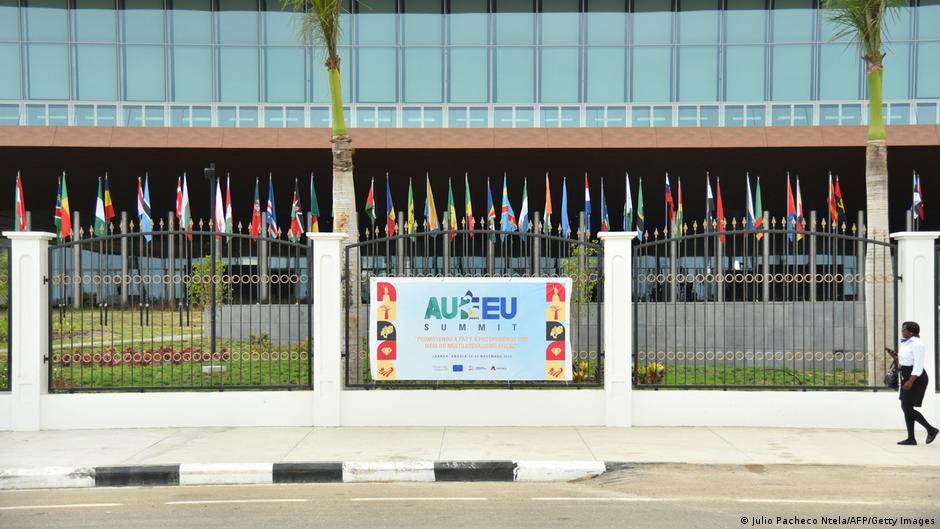
This poignant reality unfolds against the backdrop of a significant political summit in nearby Luanda, where leaders from the African Union (AU) and the European Union (EU) converge. The seventh summit, themed “Promoting Peace and Prosperity through Effective Multilateralism,” highlights the urgent need for dialogue and cooperation amidst global turbulence. Mahmoud Youssouf, chair of the AU Commission, underscores the gravity of the moment, stating that the established norms of international geopolitics are currently challenged.
Issues like Russia’s ongoing war in Ukraine, aggressive economic maneuvers by China, and intensifying conflicts within Africa amplify the sense of urgency. The brutal crisis in Sudan and the spread of jihadist extremism in the Sahel region represent severe threats to stability.
German Chancellor Friedrich Merz notes the devastating impacts of climate change on Africa, with droughts severely impacting livelihoods, forcing many to embark on perilous journeys across the Mediterranean. These challenges underscore the need for robust international cooperation, especially in light of the demographic divide: Africa is young, vibrant, and poised for growth, while Europe wrestles with an aging population.
A Complex Relationship: Africa’s Potential and Europe’s Dependence
The EU stands as Africa’s largest trading partner, with about one-third of all African exports directed toward Europe. As European Commission President Ursula von der Leyen points out, the EU recognizes the critical raw materials Africa possesses—such as cobalt, lithium, and rare earth elements—that are essential for Europe’s energy transition and industrial needs. However, Africa’s leaders are wary of becoming overly reliant on European markets.
João Lourenço, the president of Angola and current chair of the AU, emphasizes that Africa seeks to engage with a diverse array of global partners. He asserts, “We don’t want to leave the continent to others,” referencing escalating concerns regarding China’s influence through its Belt and Road Initiative, which has significantly shaped infrastructure and economic development in many African nations, including Angola.
The Need for Local Value Creation
The conversation surrounding cooperation emphasizes a transition from mere exportation of raw materials to fostering local industries. Hermine Sam, Program Coordinator South at the German Marshall Fund, advocates for this shift, warning against the old cycle where African resources leave cheaply and return as high-priced processed goods. Strengthening local processing capabilities can present a significant opportunity for Africa to leverage its resources effectively.
Olaf Wientzek of the Konrad Adenauer Foundation highlights that while Europe may be slower due to stricter regulations, it aims to provide broader economic participation than its competitors, including China. By nurturing local industries, Africa can create jobs and develop a sustainable economy, vital for a continent where a staggering 40% of the population is under 15 years old—an untapped potential that can drive future growth.
Global Gateway: Europe’s Strategic Initiative
In light of competing global influences, the Global Gateway Initiative has emerged as the EU’s answer to China’s aggressive investment strategies. This initiative aims to boost infrastructure projects across Africa via EU and private financing. One of its flagship projects, the Lobito Corridor, is set to create economic opportunities along a railway connecting raw material-rich regions in Angola, the Democratic Republic of Congo, and Zambia to the Atlantic coast.
Ursula von der Leyen touts the initiative as a way to help African nations engage with global markets while simultaneously encouraging intra-continental trade. Yet, criticism remains that the Global Gateway was conceived without adequate consultation of African needs, leading to frustrations about unmet expectations and perceived inefficiencies in delivering on promises.
The Aftermath of the Luanda Summit
As the summit in Luanda comes to a close, questions linger about the tangible outcomes for everyday Africans like Maria Magdalena. The stark contrast between the political discussions of global leaders and the everyday realities faced by the population is pronounced. Amidst her frying food over a small charcoal fire, Magdalena embodies the hopes of many: she is young and eager for work.
In a world where large-scale geopolitical discussions unfold, it’s crucial to remember the individual stories—like that of Maria Magdalena—who represent countless others striving for a better future amid the complexities of regional and global politics.
