
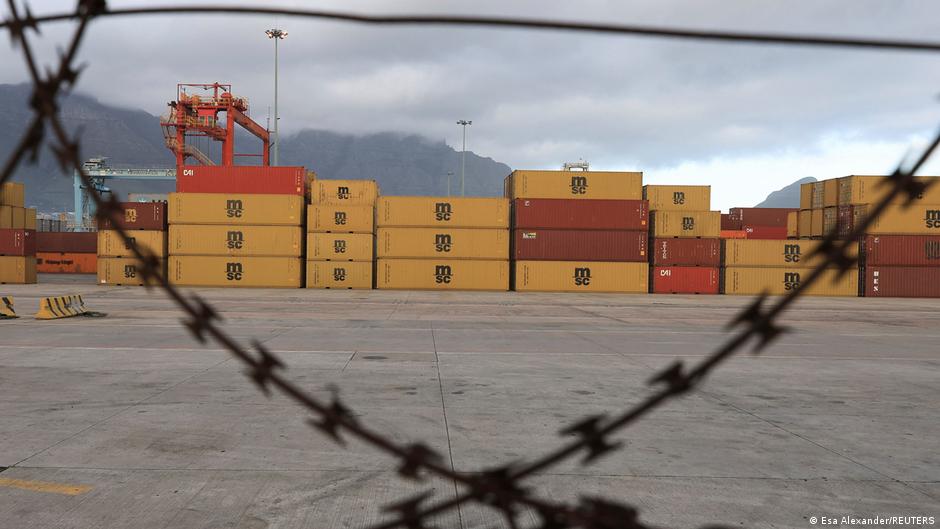
The African Growth and Opportunity Act (AGOA): A Critical Crossroad for US-Africa Trade Relations
The trade agreement between the United States and sub-Saharan African nations, known as the African Growth and Opportunity Act (AGOA), is on the brink of expiration. Set to cease on September 30, AGOA has facilitated 25 years of duty-free access for dozens of African countries to the U.S. market. As hopes for a last-minute renewal dim, the implications for African economies loom large.
AGOA: A Brief Overview
Launched in 2000 under President Bill Clinton, AGOA was designed as a strategic initiative to strengthen economic ties between the U.S. and African nations. It allowed 35 African countries to export nearly 7,000 products to the U.S. without tariffs. Over the years, AGOA has notably fostered growth in sectors such as textiles, agriculture, and raw materials, leading to significant job creation, especially in countries like Lesotho, Madagascar, and South Africa.
Economic Impact of AGOA
Zoryana Olekseyuk, a researcher from the German Institute of Development and Sustainability (IDOS), emphasizes that while AGOA has positively impacted certain sectors, its effectiveness has been mixed. For example, Lesotho could suffer a nearly 6% reduction in total exports, while Madagascar might face a 3% decline. The benefits of AGOA haven’t been uniformly distributed across all participating nations; some, like Botswana and Chad, may see losses around 2%.
Despite these mixed results, the overall growth attributed to AGOA cannot be dismissed. The textile industry, in particular, has seen a notable increase in exports, showcasing the potential benefits of access to the lucrative U.S. market.
The Threat of Increased Tariffs
As the impending expiration of AGOA draws near, African nations brace for a drastic recalibration of trade dynamics. Analysts predict that the return of higher tariffs, reminiscent of policies enacted during Donald Trump’s first presidency and expected to re-emerge if he returns to power, could devastate key sectors. South Africa, the largest exporter to the U.S. among African nations, risks losing over 35,000 jobs in its citrus industry alone—impacting the livelihoods of countless families.
Lesotho, heavily reliant on textile production, may see tariffs soar as high as 50% (recently reduced to 15%). Such steep rates could threaten the viability of entire industries dependent on the U.S. market. In Mauritius, industrial products could face tariffs up to 40%, which could hinder its economic stability.
Shifting Trade Dynamics
AGOA’s expiration comes at a time when the percentage of African exports directed towards the U.S. is already diminishing. As of 2017, only 8.5% of exports from AGOA countries reached American shores—a stark contrast to trade relations with Europe and China. Olekseyuk notes that only a limited number of African exporters have truly capitalized on AGOA, with high bureaucracy discouraging many from fully engaging in U.S. markets.
This shift may lead some nations to seek direct deals with the U.S. instead of relying on AGOA. For example, Zimbabwe is adjusting its customs policies in an effort to maintain trade continuity, while others, like South Africa and Madagascar, continue to negotiate exemptions with the U.S. in hopes of cushioning the impending blow.
The Future of African Trade
As countries reflect on the ramifications of AGOA’s end, many experts, including economist Etienne Fakaba Sissoko, view this moment not as a crisis but as an opportunity. The end of AGOA may catalyze a departure from dependency on a singular trading partnership. Sissoko advocates for a shift towards economic autonomy, highlighting the necessity for African nations to foster their own independence from external influences.
The African Continental Free Trade Area (AfCFTA), launched in 2021, aims to enhance economic independence by promoting intra-African trade. This initiative could serve as an alternative to AGOA, offering a more attractive proposition for local businesses while also catering to a larger consumer base within Africa itself.
Exploring New Trading Partnerships
Competing global powers have also begun making inroads into African markets. For instance, China has recently implemented favorable trade terms for dozens of African nations, while the European Union continues its strong engagement through Economic Partnership Agreements (EPAs). Countries like India, Turkey, Brazil, and Russia are also seeking to solidify their relationships with African nations, diversifying the continent’s economic engagements.
Mamady Kamara, a development policy consultant, highlights the urgency of establishing balanced agreements that not only enhance trade but also promote local value creation within African economies. Changing dependencies from one superpower to another could risk repeating historical patterns unless negotiated wisely.
The Path Ahead
As African countries gear up for a post-AGOA scenario, it remains to be seen how these nations will navigate the complexities of new economic relationships. While the expiration of AGOA poses significant challenges, it also presents a pivotal moment for rethinking and reshaping Africa’s economic landscape, potentially leading to greater autonomy and innovation in trade practices.
