
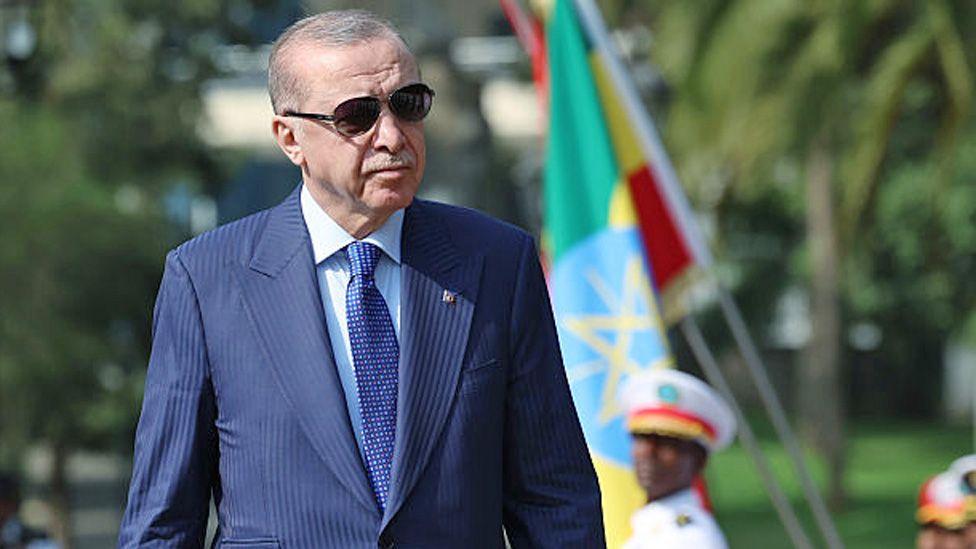
Turkey’s President Recep Tayyip Erdoğan has firmly rejected Israel’s recent recognition of Somaliland as an independent nation, a significant diplomatic maneuver that could have far-reaching implications for the Horn of Africa. During his visit to Ethiopia, Erdoğan emphasized that this recognition could escalate tensions in an already volatile region.
### Somaliland’s Path to Recognition
In December 2022, Israel became the first country to formally recognize Somaliland, a territory that has claimed independence from Somalia for over 30 years. This decision has been met with considerable backlash from the Somali government, which continues to assert that Somaliland is an integral part of its territory. The move not only reflects Israel’s growing interest in African geopolitics but also serves to highlight the complexities of regional politics in the Horn of Africa.
### Ethiopia’s Strategic Interests
Ethiopia, which is landlocked, remains silent regarding the recent developments but has previously expressed ambitions related to Somaliland’s coastline. In 2021, Ethiopia attempted to lease a portion of Somaliland’s coast to build a port, a plan that angered Somalia and raised fears of heightened regional conflict. Erdoğan had previously mediated this dispute, showcasing Turkey’s emerging role as a key player in the Horn’s geopolitical landscape.
During a joint press conference in Addis Ababa with Ethiopian Prime Minister Abiy Ahmed, Erdoğan reiterated, “The Horn of Africa should not be the battlefield of foreign forces. We believe that countries in the region should address their problems themselves.” This statement underlines Turkey’s focus on diplomacy and regional self-determination, positioning it as a stabilizing force.
### Abiy Ahmed’s Call for Sea Access
Ethiopia’s Prime Minister Abiy Ahmed used this platform to push for Ethiopia’s long-sought access to the sea, arguing that it is unjust for a country of over 130 million people to remain landlocked. In 1993, Eritrea seceded from Ethiopia, leaving the latter without direct access to the coastline and reliant on foreign ports for trade. Abiy’s request for Turkish diplomatic support to secure Ethiopian access to the southern port of Assab—located just 60 kilometers from the Ethiopian border—underscores the strategic importance of maritime routes in the region.
### Historical Context
The border conflict between Ethiopia and Eritrea has a painful history, evidenced by the devastating war from 1998 to 2000, which resulted in over 100,000 lives lost. The fallout from that conflict still influences relationships in the region. The context of Erdogan’s visit is particularly significant given the fears of renewed conflict in Ethiopia’s northern Tigray region, which borders Eritrea. Instability in Tigray could reignite past hostilities and further complicate the already intricate political landscape.
### Somaliland’s Response
In response to Erdoğan’s comments on the recognition of Somaliland, the territory’s foreign ministry urged Turkey to exercise caution and refrain from inflaming tensions in the region. Somaliland views itself as an independent state with its government and institutions; however, it struggles for international recognition, heavily relying on foreign support and diplomacy.
### Current Conditions in Tigray
Media reports indicate rising panic in Tigray amid alleged military buildups near the region. The economic situation has deteriorated, with local banks running out of cash and civil servants reportedly not receiving their January salaries. These factors contribute to the already high levels of frustration and despair in the region, casting a shadow over the possibility of a peaceful resolution.
### The Broader Geopolitical Implications
Turkey’s growing influence in the Horn of Africa comes at a time when the region faces multiple crises, not just between Somalia and Somaliland but also in the dynamics with Ethiopia and Eritrea. Erdoğan’s geopolitical maneuvering could either stabilize the region through diplomatic engagements or exacerbate existing tensions, depending on how these nations respond to external recognition and validation of claims.
As the situation unfolds, the Horn of Africa remains a critical area of focus for international observers, reflecting the intricate dance of diplomacy, historical grievances, and the quest for national identity and recognition.
