
The 39th African Union Summit: Navigating Security Challenges Across the Continent
As the 39th African Union (AU) summit approaches, the spotlight will undoubtedly be on the escalating security concerns plaguing Africa. From ongoing conflicts in Sudan to the Democratic Republic of Congo (DRC), the agenda is brimming with urgent issues that demand attention. However, the effectiveness of the AU as a peacekeeping body is increasingly under scrutiny, with recent studies revealing a troubling trend: since its establishment in 2004, a staggering 90% of decisions made by the AU’s Peace and Security Council (PSC) have gone unimplemented.
High-Level Review and the Need for Change
In anticipation of the summit, AU leaders have initiated a high-level review of their security and governance frameworks. This self-assessment aims to restructure existing programs to enhance their effectiveness. The findings and recommendations from this review will be pivotal topics of discussion during the summit.
Tim Murithi, a senior advisor at the Institute for Justice and Reconciliation, emphasized the importance of revitalizing the AU to meet the challenges of collective action among African states. As tensions rise and conflicts grow, there is a palpable appetite for reform within the AU, making this summit a potential turning point in how the organization approaches peace and security.
Spotlight on Sudan: A Humanitarian Crisis Unfolding
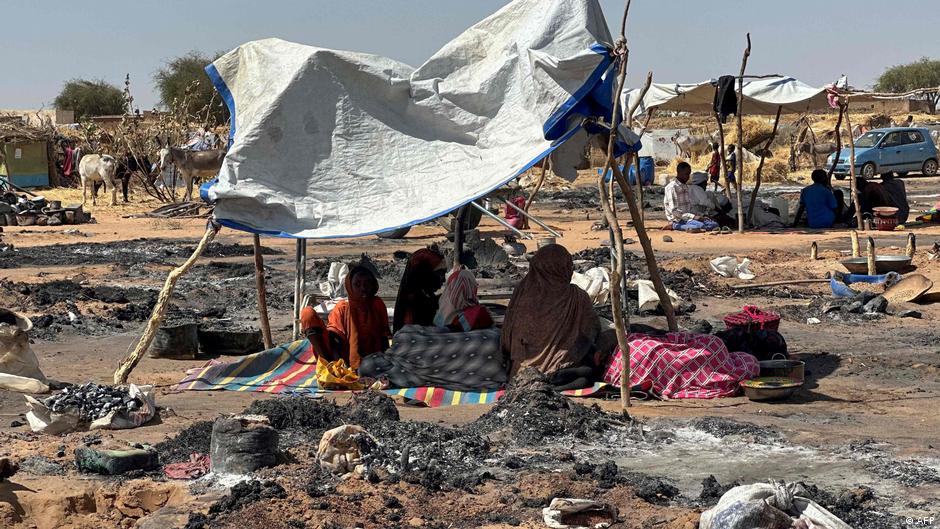
The ongoing conflict in Sudan, which erupted in April 2023 between the Sudanese Armed Forces and the rival Rapid Support Forces (RSF), has spiraled into a humanitarian disaster. Over 12 million people have been displaced, and the UN has reported at least 150,000 fatalities due to the violence. Despite pressing need, the AU and its regional partners have struggled to devise a long-term peace plan, with the AU’s principle of subsidiarity—delegating crisis management to Regional Economic Communities (RECs)—resulting in gridlock.
Moussa Soumahoro, a researcher at the Institute for Security Studies, pointed to the structural weaknesses of the East Africa’s Intergovernmental Authority on Development (IGAD), the REC responsible for the Sudan crisis. Without robust regional leadership, external players like the United States and the UAE have begun to fill the leadership vacuum, leading peace initiatives in the absence of African solutions.
The DRC: Ongoing Violence and External Influences
Another focal point of the summit will be the persistent conflict in the DRC, particularly in the eastern provinces of North and South Kivu. The Congolese army is embroiled in a protracted struggle against the M23 rebel group, which has been accused of receiving support from neighboring Rwanda. Displacement and violence continue to plague the region, creating a complex humanitarian crisis.
Mahmoud Ali Youssouf, Chairperson of the African Union Commission, expressed grave concern over the lack of de-escalation in the eastern DRC. Despite these urgent issues, dialogue and political solutions have largely been driven by external actors, with countries like the US and Qatar taking the lead in facilitating talks among conflicting parties.
The Complex Role of External Forces
The increasing involvement of external actors in African conflicts raises questions about the AU’s relevance and capability to resolve issues independently. The intervention of foreign powers, while sometimes viewed as necessary, poses its own security concerns. For instance, Soumahoro highlighted how the UAE’s presence in Sudan has complicated peace efforts, underscoring the need for a robust reform of the AU.
Tim Murithi remarked on the urgent need for the African continent to revive its institutions, advocating for stronger collective action to minimize external intervention. The challenge now lies in galvanizing the AU to take the reins in resolving its internal conflicts.
Leadership Transition and Future Prospects
As Burundi prepares to assume the AU’s rotating chairmanship in 2026, Willy Nyamitwe, the country’s permanent representative to the AU, is acutely aware of the daunting task ahead. He recognizes the myriad of conflicts plaguing the continent and the external actors that complicate the African peace narrative. Nyamitwe’s good intentions to foster peace must contend with a legacy of inaction and a pressing need for effective leadership within the AU.
Despite commitment to peace being a longstanding priority for the AU—it has been the focal point since the adoption of the roadmap to silence the guns by 2030—many believe that the path to stability remains fraught with challenges. With only four years left to achieve this ambitious goal, the quest for peace, security, and stability across Africa hangs in a precarious balance.
