

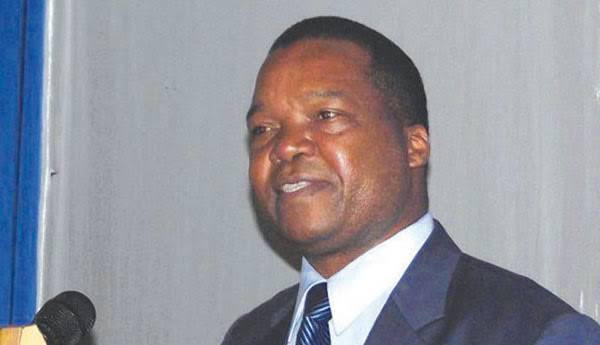
FORMER Reserve Bank of Zimbabwe (RBZ) governor John Mangudya
Former Reserve Bank of Zimbabwe (RBZ) governor John Mangudya has recently voiced a pressing issue facing Africa: the significant US$100 billion trade finance gap. During his address at the 2025 Afreximbank Annual Meetings (AAM2025) in Nigeria, he emphasized that merely employing piecemeal solutions will not suffice. Instead, he argues for comprehensive systemic reforms.
Mangudya pointed out that the continent’s dependence on external funding models is both unsustainable and inadequate for long-term growth. He urged African nations to prioritize domestic resource mobilization, enhance capital market development, and foster accelerated financial integration within the continent. This call to action reflects a broader vision for African economies to leverage their intrinsic capabilities rather than relying on foreign aid and investment.
His statements gain renewed significance in the wake of Fitch’s recent downgrade of Afreximbank, which highlighted rising credit risks. This situation has led to criticism regarding structural biases present within global rating agencies. Mangudya remarked, “Closing the finance gap is not an event; it’s a process.” This sentiment underscores the necessity for continuous effort and collaboration among institutions such as Afreximbank, the Africa Finance Corporation, and the African Development Bank in tackling this monumental task.
Africa, rich in natural resources, possesses the potential to close its trade finance gap. Mangudya emphasized the need to harness these assets optimally and mobilize domestic savings through instruments like bonds. “We need innovative funding mechanisms and must create them despite geopolitical challenges,” he stated, highlighting the imperative for African nations to adopt self-reliant strategies.
Furthermore, he expressed concern over the low financial inclusion rates across Africa, especially among marginalized groups such as women, youth, and rural communities. Mangudya argued that expanding financial access is crucial for sustainable economic progress. “We must deepen Africa’s capital markets,” he reiterated, noting that currently only a few countries boast robust, functioning stock exchanges. His call to action extends to regulators and governments to incentivize market participation through measures like tax breaks.
Central to Mangudya’s vision is the enhancement of intra-African trade. He pointed to the Pan-African Payment and Settlement System as vital infrastructure for facilitating transactions under the African Continental Free Trade Area. “Such platforms enable value exchange through efficient payment systems,” he explained, indicating a need for streamlined financial operations across borders.
A key part of this discussion is the urgent need for accelerated integration. Mangudya remarked that Africa hosts too many overlapping financial and economic frameworks, which can complicate collaboration. “We need action, not just talk,” he urged, championing the concept of an African Economic and Financial Union where central banks harmonize policies and adopt a unified set of financial instruments.
He also stressed the urgency of African-led solutions, calling for a shared commitment among nations to the principle of “Africa by Africans, for Africans.” His assertion that the time for decisive action is now resonates profoundly amidst increasingly turbulent global economic conditions, warning that delays may exacerbate challenges.
As AAM2025 unfolds under the theme “Building the Future on Decades of Resilience,” Mangudya’s insights serve as a catalyst for dialogue among African nations. The momentum for change appears palpable, but meaningful progress hinges on collective dedication to reform, integration, and innovation throughout the continent.
