

What Airstrikes in Somalia Show About the War on Terror
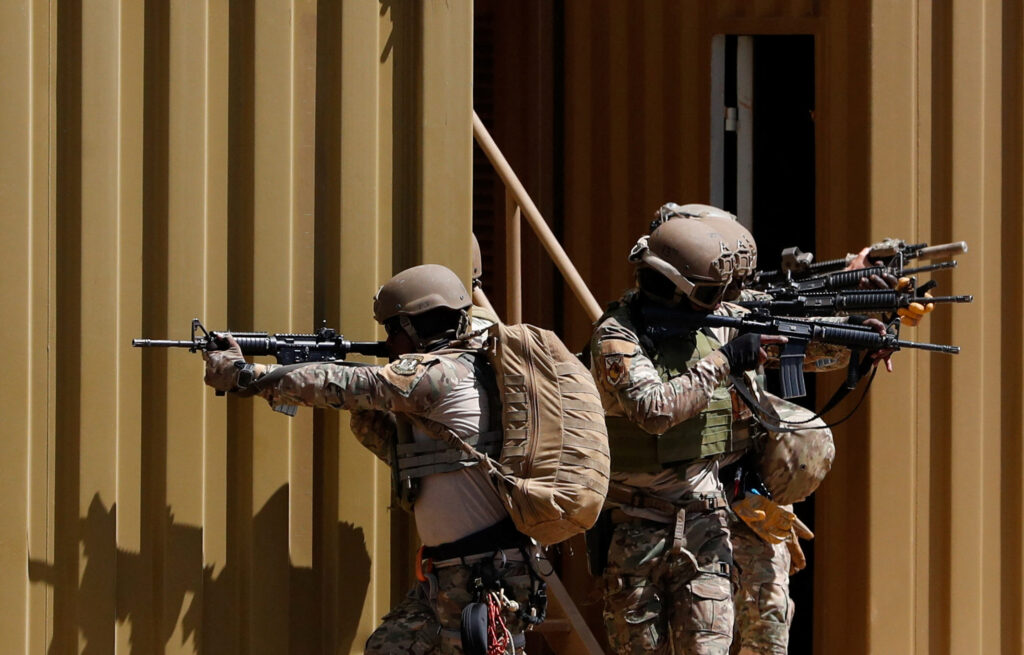
February proved to be a pivotal month for the United States Africa Command (AFRICOM) as it intensified its military operations in an area increasingly seen as a critical theater in the global war on terror. This shift in focus is underscored by a series of airstrikes against terrorist organizations in Somalia, potentially marking a new chapter in U.S. counterterrorism strategy.
Targeting ISIS in Southern Somalia
On February 1, AFRICOM launched airstrikes targeting a faction of the Islamic State, particularly in the remote Golis Mountains of northern Somalia. The main target, Ahmed Maeleninine, was a significant ISIS figure known for recruiting and financing jihadists, as well as facilitating their deployment to the U.S. and Europe. This successful strike was swiftly followed by additional actions against both al-Shabaab—affiliated with al-Qaeda—and ISIS-Somalia, underscoring an aggressive military posture that some may find surprising, given the recent trend toward troop withdrawals.
A Shift in U.S. Military Strategy
Most conversations around U.S. military involvement globally have revolved around scaling back operations, but the situation in Somalia suggests a different trajectory. This renewed commitment reflects an understanding that the fight against global terrorism has increasingly centered on Africa. Notably, former President Donald Trump’s administration had previously reduced troop numbers, raising questions about this new, more robust engagement. However, the escalating threat posed by various terror factions, particularly in east and west Africa, has prompted a reevaluation of resource allocation.
The Broader Context of Terrorism in Africa
As evidence of the growing threat, the African Union reported more than 3,400 terrorist attacks in Africa in 2024 alone, resulting in nearly 14,000 deaths. Somalia serves as a stark example of how local conflicts can have far-reaching implications. Since breaking away from al-Shabaab in 2015, ISIS-Somalia has experienced significant growth. According to AFRICOM, the group doubled in size last year, suggesting that these terror organizations have firmly embedded themselves in regional dynamics.
Interestingly, Abdul Qadir Mumin, now reportedly the global leader of ISIS, has emerged as a notable figure of concern. The possibility that a non-Arab leader now heads the terror group signifies an alarming intertwining of global jihadism with African socio-political issues.
The Sahel: Another Breeding Ground for Terror
The threat is not confined to Somalia. Terrorist groups proliferate across Africa, from the Great Lakes region to Mozambique. The Sahel, in particular, has become a hotbed of extremist activity, where various factions—including Jama’at Nusrat al-Islam wal-Muslimin, the Islamic State in the Greater Sahara, and Boko Haram—vie for domination.
The political chaos created by a series of military coups across the Sahel has facilitated the expansion of these groups. As democratic governments crumble, foreign influence—including U.S. and European support—has diminished, often replaced by risky partnerships with mercenaries, such as those from Russia. This transition has often proven ineffective; for instance, in Mali, local extremists have made significant territorial gains, raising alarms about the efficacy of mercenary support.
The Future of U.S. Engagement in Africa
With the U.S. military now pivoting back towards Africa, questions linger regarding the nature of future engagements. Will this involve partnerships with the juntas that have risen to power in the Sahel? While a definitive answer remains elusive, the lessons of past operations, such as the deadly Tongo Tongo ambush in Niger in 2017, weigh heavily on policymakers. The incident serves as a cautionary tale about the complexities and risks of operating within a landscape characterized by fluid alliances and varying loyalties.
Beyond military strategy, it’s essential to recognize the broader context of global engagement. While focus in recent years shifted toward conflicts in Eastern Europe and the Middle East, the entrenchment of terrorist groups in Africa underscores the urgent need for renewed attention. This is not merely an African issue; the implications spill over into global security, particularly for the United States and its allies.
U.S. Military Posturing
Secretary of Defense Pete Hegseth, during his recent reassessment of military operations, emphasized Africa as the front lines of a battle against Islamist extremism. In statements regarding enhanced operations, he clarified that the U.S. would not tolerate the establishment of terror strongholds that could threaten national security. His directives indicating a loosening of restrictions on airstrikes signal a significant shift toward a more aggressive military stance in counterterrorism.
The airstrikes in Somalia may just be the beginning. As U.S. military involvement matures, it will likely lead to more comprehensive strategies aimed not only at dismantling current terrorist operations but also at addressing the underlying conditions that allow such groups to flourish.
This article delves into the multifaceted dynamics of modern warfare against terrorism, particularly in Africa. As events unfold, the narrative surrounding U.S. military operations is one of adaptation, vigilance, and strategic recalibration in response to evolving threats. The complexities of African geopolitics now sit triumphantly at the forefront of the international community’s counterterrorism agenda, demanding urgent and sustained attention.
